If you’ve ever searched for black seed oil online, you might have noticed that some brands call it black cumin seed oil. This has led to considerable confusion, are they the same thing or two completely different oils? Let’s clear this up once and for all, especially for Indian consumers who often use the Hindi term Kalonji oil.
The Source of Confusion
Both “black seed oil” and “black cumin seed oil” sound similar, but they can come from two entirely different plants. This confusion started because of the word “cumin,” which is familiar to most people as a kitchen spice (jeera in Hindi). However, not everything called cumin comes from the same family.
The Real Black Seed Oil: Nigella Sativa
The true Black Seed Oil is extracted from the seeds of the Nigella sativa plant. These small black seeds are known in India as Kalonji and have been used in Ayurveda and Unani medicine for centuries.
Scientific name: Nigella sativa
Common names: Black seed, Kalonji, Black caraway, Habbatus Sauda
Key active compound: Thymoquinone (TQ) – the ingredient that gives the oil its powerful antioxidant, anti-inflammatory, and immunity-boosting properties.
This is the same oil used in traditional remedies for:
- Boosting immunity and digestion
- Promoting hair growth and reducing dandruff
- Improving skin texture and healing acne
- Supporting overall wellness when consumed daily
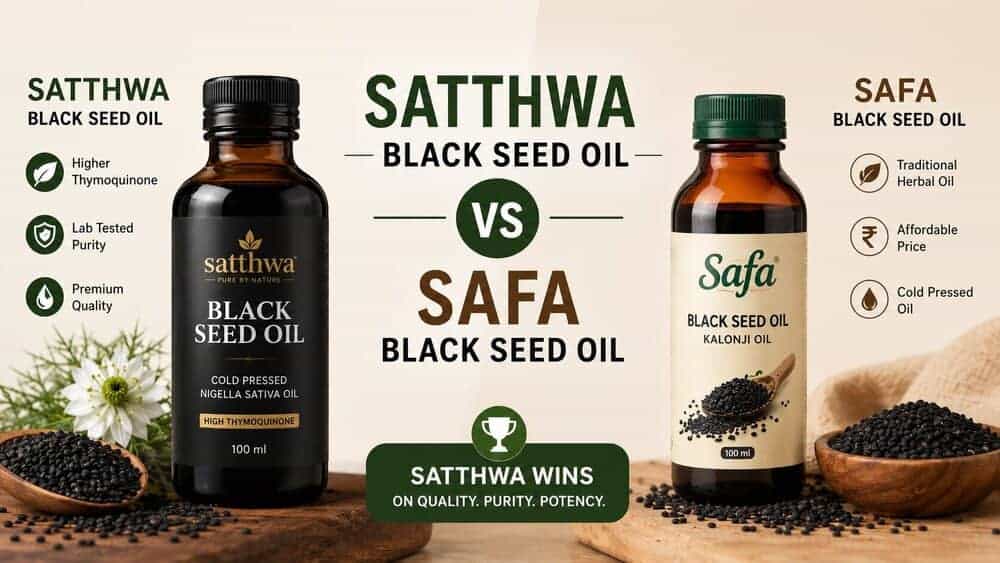
When you see “Black Seed Oil” on Satthwa’s label, it means pure Nigella sativa oil, rich in Thymoquinone and cold-pressed to preserve its nutrients.
The Other Black Cumin: Bunium bulbocastanum
There’s another plant called Bunium bulbocastanum, sometimes referred to as “black cumin.”
It’s used as a spice in Middle Eastern cooking and has a cumin-like aroma. However, it’s not the same as Nigella sativa, and its oil does not contain Thymoquinone.
That means it lacks the key medicinal and therapeutic properties found in true black seed oil.
In short:
- Bunium bulbocastanum = Culinary spice
- Nigella sativa = Medicinal oil (Black Seed Oil)
How Brands Add to the Confusion
Many international and even Indian brands label Nigella sativa oil as “Black Cumin Seed Oil” because the term sounds more familiar to global consumers. But if you look at the botanical name on the packaging, you’ll know what you’re getting.
Always check the ingredient list for:
Nigella Sativa (Black Seed) Oil
If the label says Bunium bulbocastanum, that’s a different oil altogether.
How to Identify the Authentic One
Here’s how you can ensure you’re buying the right black seed oil:
- Check the botanical name: It should say Nigella sativa.
- Look for Thymoquinone content: Genuine oils mention TQ percentage (Satthwa’s has a High 2% TQ Content).
- Cold-Pressed: This retains nutrients and potency.
- Dark glass packaging: Protects the oil from light and oxidation.
Conclusion
So, to sum up:
Black Seed Oil (Nigella sativa) and Black Cumin Seed Oil (Bunium bulbocastanum) are not the same.
But most brands that say “black cumin seed oil” actually mean Nigella sativa oil — the true, beneficial black seed oil.
If you’re buying black seed oil for health, hair, or skin, always look for Nigella sativa on the label. That’s the only way to be sure you’re getting the real thing.
About Satthwa Black Seed Oil
Satthwa Organic Black Seed Oil is 100% pure and cold-pressed from Nigella sativa seeds.
It is naturally rich in Thymoquinone (TQ) and essential fatty acids that promote:
- Hair growth and scalp nourishment
- Clearer, healthier skin
- Improved digestion and immunity when consumed daily
Buy Satthwa Black Seed Oil here