Thymoquinone, often written as TQ, is the primary active compound in Nigella sativa. Here’s the thing. This single molecule drives most of the interest around black seed oil in research circles. Let’s break it down in a simple way so that both humans and search engines understand what it does, why it matters, and how scientists study it.
What Thymoquinone Is
Thymoquinone is a bioactive compound found in the volatile oil of black seeds. Researchers study it because it shows clear anti-inflammatory, antioxidant, and immune-supporting actions in lab and animal studies. These actions explain why many people use black seed oil for health support.
How Thymoquinone Works in the Body
What this really means is that TQ interacts with several pathways that influence inflammation, oxidative stress, cell protection, and metabolic balance.
1. Anti-inflammatory action
TQ helps slow inflammatory signals in the body. Many studies show that it reduces markers such as TNF-α and IL-6. This effect explains why people look at black seed oil for joint health, gut comfort, and long-term wellness support.
2. Antioxidant support
TQ fights oxidative stress by improving antioxidant enzyme levels. Oxidative stress can speed up ageing and weaken cell function. By reducing this stress, TQ supports healthier cells.
3. Immune support
TQ helps the immune system work in a balanced way. It helps the body respond better to infections while keeping excess inflammation under control.
4. Metabolic balance
Researchers explore how TQ affects blood sugar and lipid profiles. Some studies show better insulin response and stable fasting glucose. These effects make people curious about its role in diabetes support, even if the evidence is still growing.
5. Liver protection
There is early evidence that TQ may help the liver handle toxins more efficiently. It supports enzymes that protect liver cells. It is important to note that this does not mean black seed oil is a cure for liver diseases.
6. Potential anticancer research
Scientists are studying Thymoquinone for its ability to influence cancer cell behaviour. Lab studies show that it can slow the spread of certain cancer cell types and support healthy cell regeneration. These are early-stage findings and should not be viewed as a claim for treatment.
How Long It Takes to See Effects
People often ask about timelines. TQ starts working on digestion, gut comfort, and sleep within a few days when taken through black seed oil. For immune health, inflammation, or skin results, it usually takes a few weeks. Research timelines vary, but this pattern appears across user experiences.
How Thymoquinone Is Extracted
TQ appears in highest concentration when oil is cold-pressed from high-quality seeds. Steam-distilled volatile oil contains even higher TQ but is rarely used as a consumer product because it is strong and expensive. Most edible black seed oils have TQ levels between 1 percent and 2.4 percent.
Benefits Backed by Research
Here are the areas where published studies show promising outcomes.
1. Blood sugar and insulin support
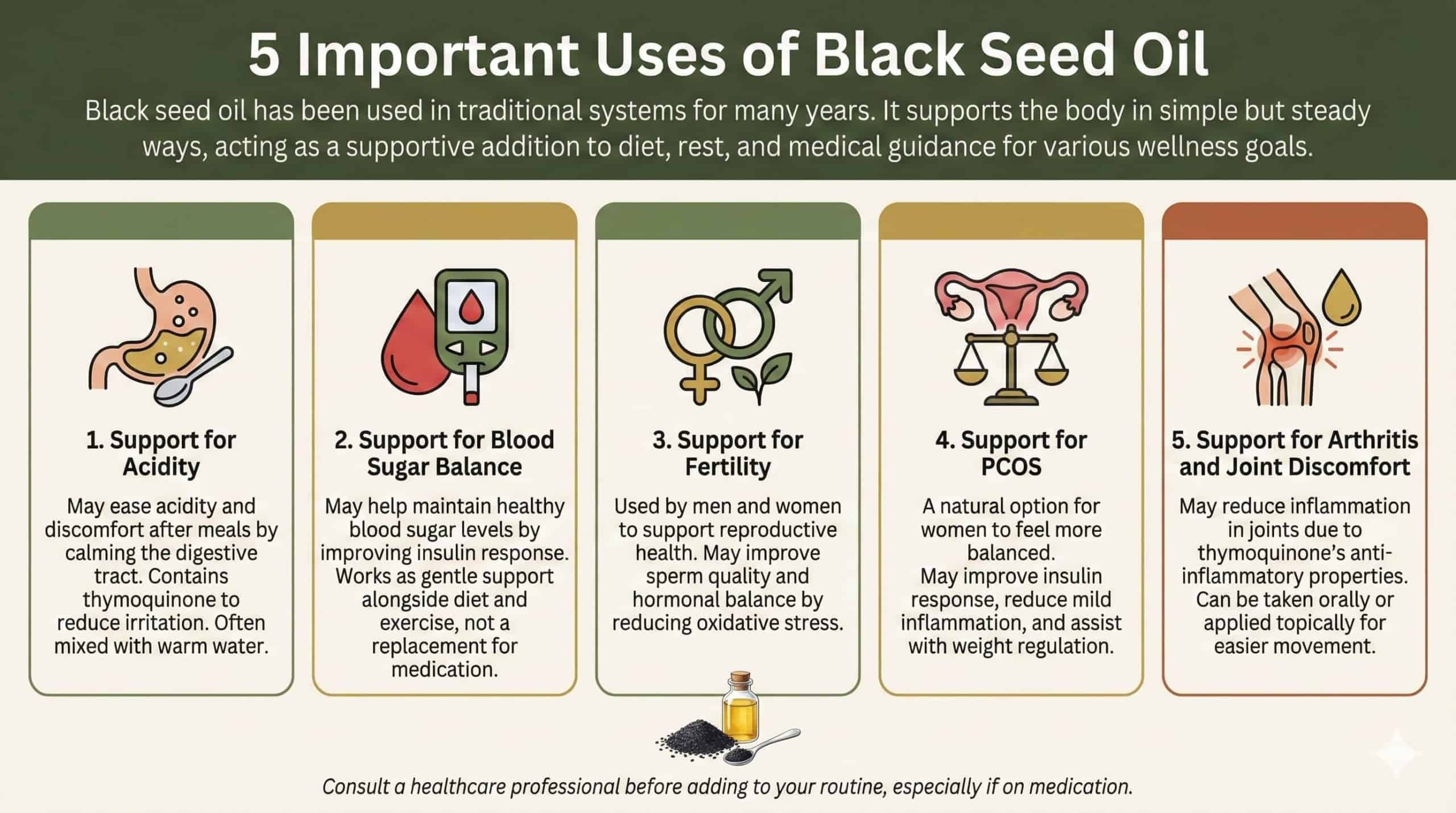
Several small trials report lower fasting glucose and improved insulin sensitivity after regular black seed oil consumption.
2. Joint and arthritis support
TQ shows anti-inflammatory effects that help reduce stiffness and morning discomfort in arthritis patients.
3. Respiratory support
Researchers see improved airway comfort and reduced oxidative stress in asthma-related studies.
4. Digestive support
TQ calms gastric irritation and acidity. This is why people use black seed oil for heartburn relief.
5. Skin health
TQ supports a stable skin barrier and reduces redness. It helps with acne-prone skin in some studies because of its antimicrobial action.
6. Heart health
Studies show improvements in LDL, HDL, and overall lipid markers. This suggests a supportive effect on cardiovascular health.
Safety and Things to Keep in Mind
Here’s the thing. Thymoquinone is powerful, so moderation matters.
1. Dosage
Most studies use black seed oil in the range of 1 to 3 ml per day for adults. This supplies TQ in small, safe amounts. High doses of isolated TQ are not recommended outside clinical settings.
2. Pregnancy
Pregnant women should avoid high internal doses of black seed oil because it may stimulate uterine muscles.
3. Kids
Small doses may be safe, but always consult a paediatrician.
4. Medication interactions
People on blood pressure, diabetes, epilepsy, or those on anticoagulant medicine should check with a doctor before regular use.
5. Liver conditions
TQ supports liver enzymes at low doses, but very high amounts may add pressure on the liver. Stick to standard daily intake levels.
Why Thymoquinone Matters
TQ is the reason black seed oil appears in so many scientific discussions. It explains the oil’s support for inflammation control, metabolic balance, and cell protection. It is not a cure for any disease, but it works as a strong supportive compound that promotes better long-term wellness.
Conclusion
Thymoquinone shows clear scientific interest due to its wide range of actions. It controls oxidative stress, improves inflammation response, and supports metabolic and immune health. Researchers continue to study it, and new findings appear every year. For now, its role remains supportive, steady, and promising for people who use black seed oil in a sensible and safe manner.