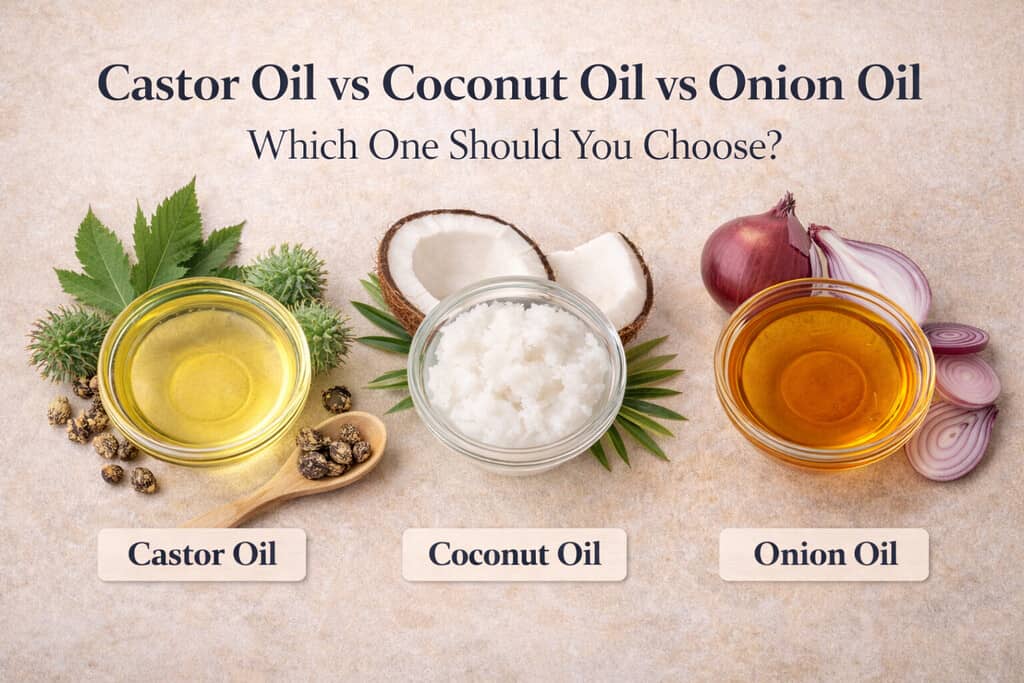
Hair oils are no longer a one-size-fits-all choice. Castor oil, coconut oil, and onion oil all trend heavily in India, but they solve very different problems.
Here’s the thing. Most people pick an oil because it is popular, not because it suits their scalp or hair concern. That’s why results feel inconsistent.
Let’s break it down simply.
Understanding What Each Oil Actually Does
Before choosing, it helps to know how these oils work, not what they promise.
Castor Oil
Best for scalp health and hair strength
Castor oil is thick and rich in ricinoleic acid. This fatty acid improves scalp circulation and helps reduce dryness and flaking.
What castor oil does well
• Strengthens weak hair
• Reduces breakage
• Helps dry or flaky scalp
• Digestion support
What it does not do
• It does not magically regrow hair
• It does not suit oily scalps when used alone
Castor oil works best when used sparingly or blended with lighter oils.
Coconut Oil
Best for daily nourishment and protein protection
Coconut oil penetrates the hair shaft better than most oils. That makes it excellent for reducing protein loss, which is a major cause of hair damage.
What coconut oil does well
• Prevents hair damage
• Softens dry hair
• Suitable for regular use
• Works for most scalp types
What it does not do
• It does not address scalp issues deeply
• It does not target hair fall causes
Coconut oil is maintenance-focused. It keeps hair healthy but does not treat specific problems.
Onion Oil
Best for hair fall linked to scalp imbalance
Onion oil is known for its sulphur content. Sulphur supports keratin production, which matters for hair structure.
What onion oil does well
• Helps reduce hair fall
• Supports new hair growth cycles
• Improves scalp condition over time
What it does not do
• It can irritate sensitive scalps
• Smell can be unpleasant
• Not ideal for daily oiling
Onion oil works best as a treatment oil, not a daily moisturiser.
Comparison Based on Hair Concerns
If your main issue is hair fall
Choose onion oil
It addresses root level weakness better than the other two.
If your hair breaks easily or feels dry
Choose castor oil
It strengthens and seals hair strands effectively.
If you want healthy, manageable hair
Choose coconut oil
It is ideal for regular nourishment.
Comparison Based on Scalp Type
• Oily scalp
Coconut oil works best. Avoid heavy castor oil directly on scalp.
• Dry or flaky scalp
Castor oil helps when used once or twice a week.
• Sensitive scalp
Coconut oil is the safest option.
Texture and Washability
This matters more than people admit.
Castor oil is very thick and needs thorough washing. Coconut oil washes off easily. Onion oil sits in between depending on formulation.
If you struggle with buildup, lighter oils or blends are better.
Can You Use Them Together?
Yes, and this is often the smartest approach.
Many people mix castor oil with coconut oil to reduce thickness. Onion oil can be used once or twice a week, while coconut oil handles daily care.
Blending balances effectiveness and comfort.
The Real Reason People Get Mixed Results
Hair oils support hair health. They do not replace nutrition, stress management, or medical care.
If hair fall is hormonal, nutritional, or genetic, oils help only as support. They are not standalone solutions.
Final Takeaway
There is no single best hair oil for everyone.
Choose castor oil if strength and scalp health matter most.
Choose coconut oil if you want simple, regular nourishment.
Choose onion oil if hair fall is your main concern.
The right oil depends on your scalp, your routine, and how consistently you use it.