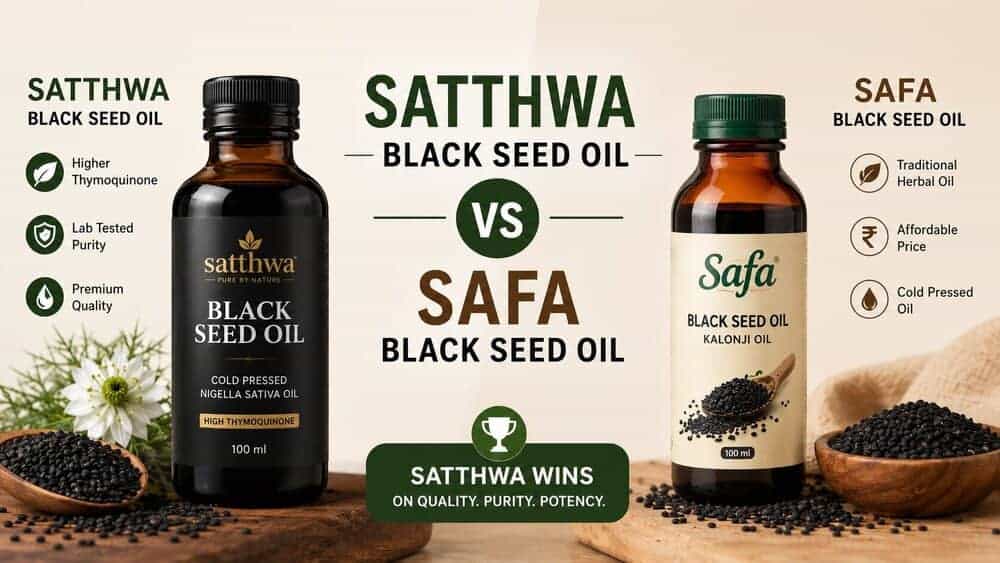
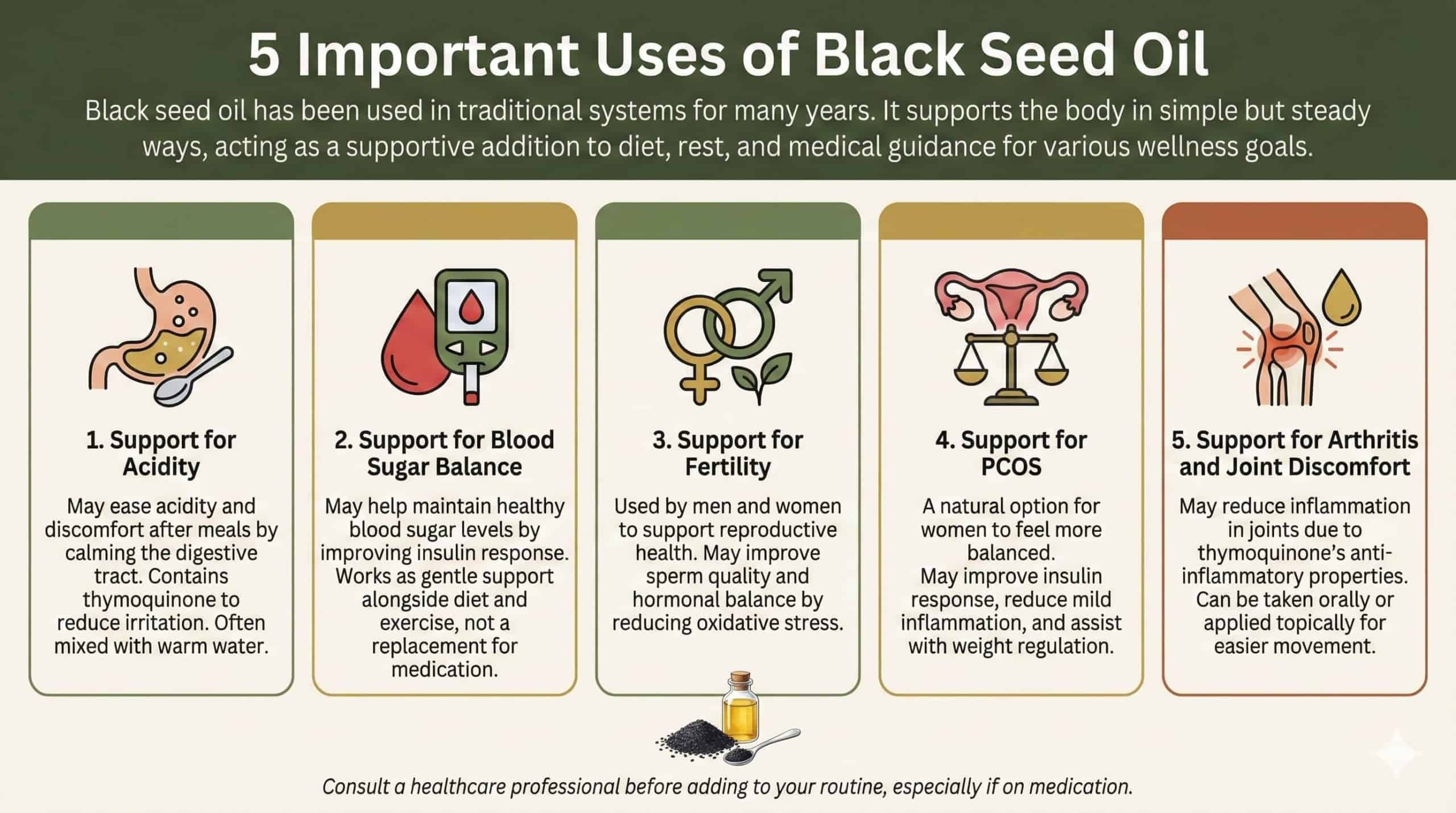
Black seed oil, also known as Kalonji oil, is treasured in Ayurveda, Unani, and traditional medicine for its powerful health benefits. Extracted from the seeds of Nigella sativa, it is rich in antioxidants, anti-inflammatory compounds, and most importantly, Thymoquinone (TQ), the bioactive compound that gives it its healing potential.
However, with increasing demand, the market has also seen a rise in adulterated and low-quality oils. Such oils not only lack effectiveness but can also be harmful. This is why it is essential to know how to test the purity of black seed oil before consuming or applying it.
Here are 5 effective ways to check if your black seed oil is pure or adulterated:
1. Check the Ingredients & Label
The first step is to carefully examine the product label.
- Pure black seed oil should list only 100% Pure Nigella Sativa or Nigella Sativa Seed Oil as the ingredient.
- Be cautious if the label mentions mineral oil, fragrance, preservatives, or other carrier oils, unless clearly specified and transparently disclosed.
- Avoid vague terms like “herbal blend” or “natural oil” as they often indicate dilution.
👉 Tip: Always prefer brands that are transparent about sourcing, extraction method, and purity.
2. The Smell Test
One of the easiest home tests is checking the aroma.
- Pure black seed oil has a strong, pungent, and spicy smell, often compared to oregano, cumin, or black pepper.
- If the oil smells too mild, unusually sweet, or artificial, it’s a red flag. Such oils are often diluted with cheaper oils or perfumed to mask impurities.
👉 Tip: A little pungency is a good sign; it means the oil is potent and unadulterated.
3. Cold-Pressed Mention
Extraction plays a huge role in the oil’s quality.
- Look for words like “cold-pressed” or “extra virgin” on the label.
- Cold-pressed oil is extracted without heat, ensuring that Thymoquinone (TQ) and antioxidants remain intact.
- On the other hand, heat-processed oils lose their nutrient profile and may appear lighter in aroma and colour.
👉 Tip: Cold-pressed black seed oil not only has superior health benefits but also a longer shelf life.
4. Consistency & Colour
The look and feel of the oil also reveal a lot.
- Pure black seed oil is slightly thick and ranges in colour from dark amber to deep brown.
- If the oil is pale, watery, or too light, it may be mixed with cheaper carrier oils.
- Shake the bottle gently, pure oil will move slowly because of its natural thickness.
👉 Tip: Always store black seed oil in a dark glass bottle, away from sunlight, to preserve its potency.
5. Thymoquinone (TQ) Percentage
This is the gold standard for measuring quality.
- Thymoquinone (TQ) is the key compound responsible for black seed oil’s anti-inflammatory, antioxidant, and immune-boosting properties.
- High-quality oils usually mention TQ content on the packaging, with 1%–2% TQ considered potent and effective.
- If no TQ information is provided, the oil’s quality is questionable.
👉 Tip: Look for lab-tested oils with verified TQ percentage for maximum benefits.
Final Thoughts
Black seed oil is a powerful natural remedy, but only if it’s pure and authentic. By checking the label, smell, extraction method, consistency, and Thymoquinone content, you can easily differentiate between genuine and adulterated oils.
A little awareness goes a long way in ensuring you get the true benefits of this ancient remedy.
Choose wisely. Choose purity.