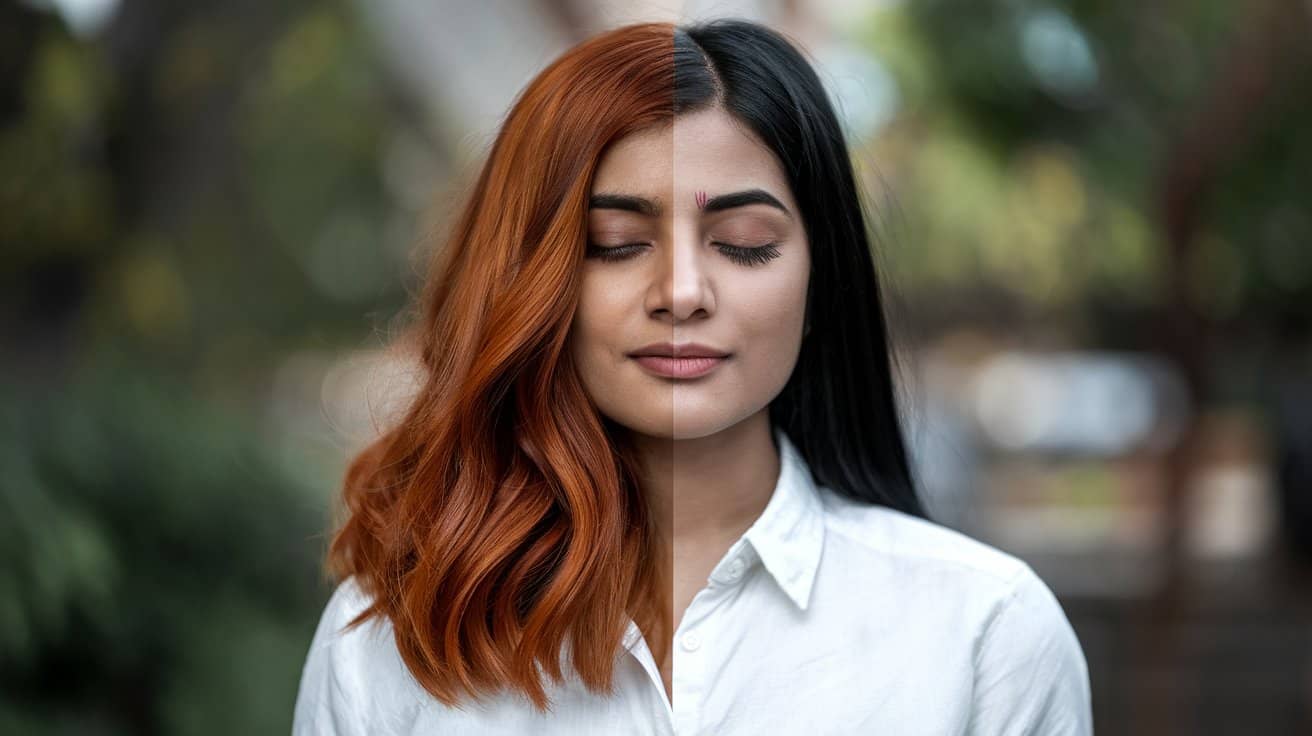
Choosing the right hair dye can be confusing, especially with so many options available. The two most common choices are natural hair dyes and chemical hair dyes. While chemical hair dyes are known for their fast results and long-lasting colour, organic hair dyes are gaining popularity for being gentle and free from harmful chemicals.
This article breaks down the key differences, pros, cons, and provides a comparison chart to help you make the best choice for your hair.
What Are Organic Hair Dyes?
Organic hair dyes are made using natural plant-based ingredients like henna, indigo, beetroot, and other botanical extracts. They contain little to no synthetic chemicals like ammonia, parabens, or artificial fragrances.
Unlike chemical dyes, organic hair dyes coat the outer layer of the hair, enhancing its colour without penetrating the hair shaft. This makes them a safer and more natural alternative for people with sensitive skin or allergies.
Common Ingredients in Organic Hair Dyes:
- Henna: Adds red, orange, or brown tones.
- Indigo: Creates rich black and dark brown shades.
- Beetroot Extract: Provides reddish or purple hues.
What Are Chemical Hair Dyes?
Chemical hair dyes contain synthetic ingredients that penetrate the hair shaft to permanently change the hair’s natural pigment. These dyes are widely used in salons and at home because they provide long-lasting colour, more shade variety, and the ability to lighten or darken hair.
Chemical dyes can be permanent, semi-permanent, or temporary, depending on the ingredients and how deeply they penetrate the hair shaft.
Common Chemicals in Hair Dyes:
- Ammonia: Opens the hair cuticle to allow dye penetration.
- Peroxide: Lightens hair to help deposit new colour.
- PPD (p-Phenylenediamine): Responsible for darker colours like black and brown.
Pros and Cons of Organic Hair Dyes
Pros:
- Natural and Chemical-Free: Organic hair dyes like Satthwa Organic Indigo Powder and Satthwa Organic Henna Powder are free from harsh chemicals like ammonia, parabens, and artificial fragrances.
- Safe for Sensitive Scalps: They are hypoallergenic and safe for those with sensitive skin, allergies, or scalp conditions.
- Hair and Scalp Nourishment: Ingredients like henna and amla strengthen hair, reduce breakage, and improve hair texture.
- No Strong Smell: Unlike chemical dyes, organic dyes have a natural, earthy smell.
- Eco-Friendly: Natural dyes are biodegradable and environmentally friendly.
Cons:
- Limited Colour Choices: Organic dyes are mostly available in natural tones (black, brown, and red). Fashion colours like blue or purple are not achievable.
- Longer Application Time: Organic dyes take 1-2 hours (or more) to develop compared to 20-30 minutes for chemical dyes.
- Shorter Longevity: Organic dyes coat the outer layer of the hair, so they fade faster than permanent chemical dyes.
- Gradual Colour Build-Up: Repeated applications may be needed to achieve deeper or darker tones.
Pros and Cons of Chemical Hair Dyes
Pros:
- Wide Range of Colours: Chemical dyes offer a vast range of colours, including vibrant shades like blue, green, and pink.
- Long-Lasting Results: Permanent chemical dyes can last for 6-8 weeks or more, depending on hair type and care.
- Quick Application Time: Hair colour develops in just 20-30 minutes, making it a faster process.
- Ability to Lighten Hair: Chemical dyes can bleach or lighten hair, which is not possible with organic dyes.
Cons:
- Chemical Exposure: Contains ammonia, peroxide, and PPD, which can irritate the scalp and skin.
- Hair Damage: Chemicals weaken the hair shaft, leading to dryness, breakage, and split ends.
- Potential Allergic Reactions: Some people are allergic to PPD and parabens, which can cause itching, rashes, or burning.
- Strong Odour: Chemical dyes have a strong smell due to ammonia and other volatile compounds.
- Not Eco-Friendly: Chemical dyes can contaminate water systems and are not biodegradable.
Comparison Chart: Organic Hair Dyes vs Chemical Hair Dyes
| Feature | Organic Hair Dyes | Chemical Hair Dyes |
|---|---|---|
| Ingredients | Natural (henna, indigo, amla, beetroot) | Synthetic (ammonia, PPD, peroxide) |
| Hair Penetration | Coats the outer layer of the hair | Penetrates the hair shaft |
| Allergy Risk | Low (suitable for sensitive skin) | High (may cause allergic reactions) |
| Application Time | 1-2 hours | 20-30 minutes |
| Colour Range | Natural shades (black, brown, red) | Wide range (natural & fashion colours) |
| Hair Health | Nourishes hair, prevents breakage | Weakens hair, causes dryness |
| Lasting Power | Lasts 3-4 weeks | Lasts 6-8 weeks or longer |
| Odour | Mild, earthy scent | Strong chemical smell |
| Eco-Friendliness | Environmentally friendly | Harmful to the environment |
Which One Should You Choose?
Your choice depends on your personal needs and hair goals. Here’s a quick guide:
- Choose Organic Hair Dyes If:
- You want a natural option that nourishes your hair.
- You have a sensitive scalp or allergies to synthetic dyes.
- You prefer darker, natural hair colours like black, brown, or auburn.
- Choose Chemical Hair Dyes If:
- You want long-lasting, permanent colour.
- You want bright or non-traditional colours like purple, blue, or pink.
- You want to lighten your natural hair colour.
Are Organic Hair Dyes Safer Than Chemical Dyes?
Yes, organic hair dyes are much safer than chemical dyes. Since they do not contain ammonia, PPD, or peroxide, they are less likely to cause allergic reactions, hair damage, or skin irritation. In contrast, chemical hair dyes are known to weaken hair, increase breakage, and leave the hair dry.
How to Make Organic Hair Dye Last Longer
Since organic hair dyes fade faster than chemical dyes, here’s how to make them last longer:
- Use a Mild Shampoo: Use a sulphate-free shampoo like Satthwa Daily Drench Shampoo to avoid stripping the natural dye.
- Avoid Heat Styling: Excessive use of heat tools can fade natural hair dye.
- Reapply When Needed: Unlike chemical dyes, you can safely reapply organic dyes without causing hair damage.
Final Verdict: Organic vs Chemical Hair Dyes
Both organic and chemical hair dyes have their pros and cons. While chemical dyes offer more colour variety and longevity, organic hair dyes are safer, healthier, and eco-friendly. If you value health, scalp care, and natural products, organic dyes like Satthwa Organic Indigo Powder and Satthwa Organic Henna Powder are the better choice. On the other hand, if you want bright, vivid colours or the ability to bleach and lighten your hair, you may prefer chemical dyes.
If you’re looking for a safe, natural way to colour your hair, Satthwa Organic Hair Dyes offer a chemical-free alternative that nourishes your hair while giving you rich, natural colour. For long-term hair health, it’s always wise to choose organic over synthetic.