In the world of natural skincare, Bentonite Clay vs Multani Mitti are two of the most trusted, time-tested ingredients. Both are known for their ability to absorb excess oil, detox the skin, and treat breakouts—but which one is right for you?
Let’s break down their origins, benefits, differences, and best use cases so you can make the right choice for your skin type.
What is Bentonite Clay?
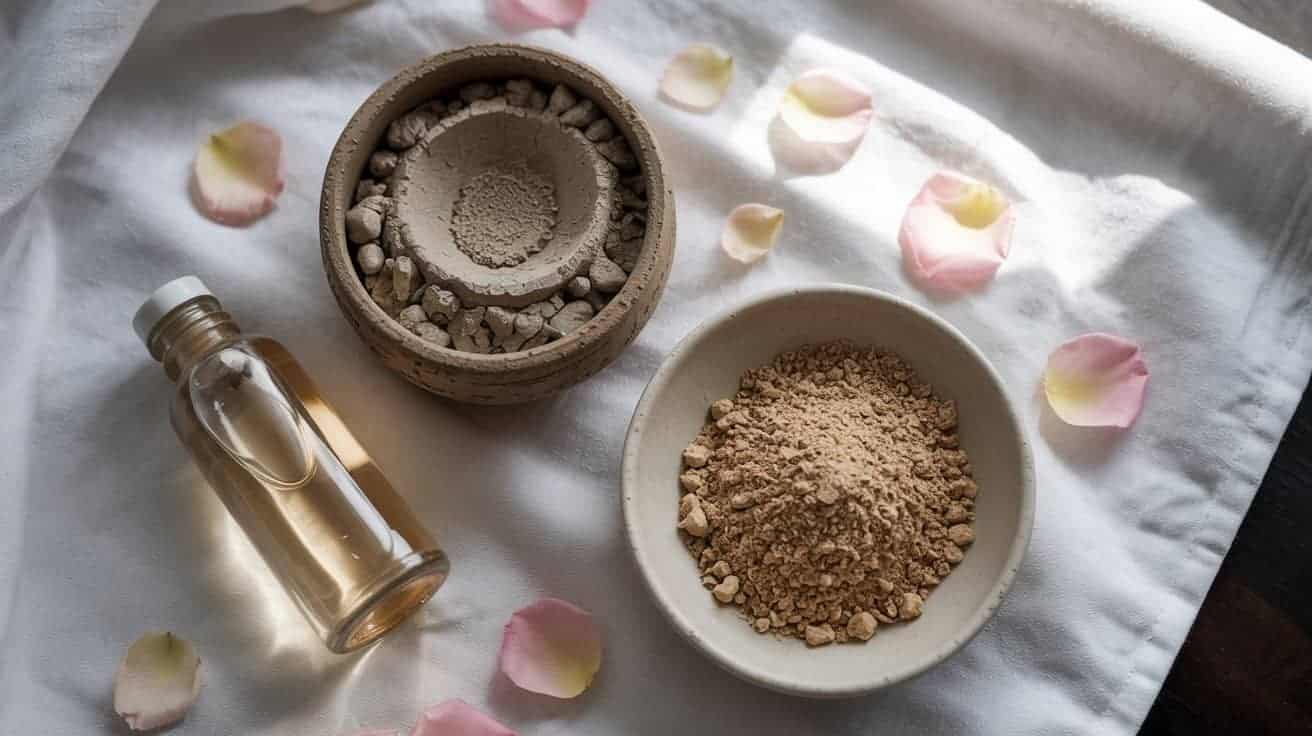
Bentonite clay is formed from volcanic ash and is rich in minerals like calcium, magnesium, and iron. It has strong negatively charged ions, which bind with positively charged toxins and impurities on the skin.
Often grey or cream in colour, bentonite clay is known for its deep-cleansing and detoxifying properties.
What is Multani Mitti?
Multani mitti, also called Fuller’s Earth, is a type of natural clay from India. It has been used in Ayurvedic and Unani systems of medicine for centuries. Known for its cooling, oil-absorbing, and exfoliating effects, it’s one of the most popular choices for acne-prone and oily skin.
It usually appears as a yellowish-beige powder with a smooth texture.
Bentonite Clay vs Multani Mitti: Key Differences
| Feature | Bentonite Clay | Multani Mitti |
|---|---|---|
| Origin | Volcanic ash (USA/Europe) | Naturally occurring Indian clay |
| Skin Type | Oily, acne-prone, inflamed | Oily, normal, sensitive |
| Main Use | Detoxifying, deep pore cleansing | Oil control, skin brightening |
| Texture | Smooth, dense, sticky when wet | Silky, lighter, easy to apply |
| Mineral Content | High in calcium, magnesium | Rich in silica, alumina |
| Absorption Strength | High (may dry skin) | Moderate (gentler) |
| Suitability for Sensitive Skin | Use with caution | Generally safe |
Benefits of Bentonite Clay
- Draws out toxins and bacteria
- Reduces acne and blackheads
- Tightens pores
- Soothes inflammation (when mixed with aloe or rose water)
- Ideal for deep cleansing masks
Benefits of Multani Mitti
- Controls oil and shine
- Reduces acne and dark spots
- Improves blood circulation to the skin
- Brightens complexion
- Can be used as a gentle scrub or face pack
Which Clay Should You Use?
Choose Bentonite Clay if:
- You have very oily or acne-prone skin
- You need a deep detox treatment
- You can tolerate strong, drying ingredients
- You want to spot-treat breakouts
Tip: Always mix it with apple cider vinegar or aloe vera gel to balance the pH.
Choose Multani Mitti if:
- You have a combination or sensitive skin
- You want a cooling, soothing effect
- You prefer traditional, Ayurvedic skincare
- You’re looking for a gentle, brightening pack
Tip: Mix with rose water, milk, or honey for softer skin and a mild glow.
Precautions When Using Either Clay
- Don’t let the clay fully dry and crack on your skin—it can lead to over-drying.
- Always do a patch test before trying a new ingredient.
- Follow with a hydrating toner and moisturiser.
- Avoid daily use—1–2 times a week is ideal.
DIY Clay Mask Recipes
For Oily/Acne-Prone Skin:
- 1 tsp bentonite clay
- 1 tsp apple cider vinegar
- 2 drops tea tree oil
For Sensitive/Dull Skin:
- 1 tsp multani mitti
- 1 tsp rose water
- 1 tsp aloe vera gel
Apply for 10–12 minutes, then rinse with lukewarm water and moisturise.
Final Verdict
Both bentonite clay and multani mitti are excellent skincare ingredients, but their effects and strengths differ. Bentonite is a stronger detoxifier, while multani mitti is gentler and more versatile for regular use.
Choose the one that suits your skin type and concerns, and let nature do the rest.