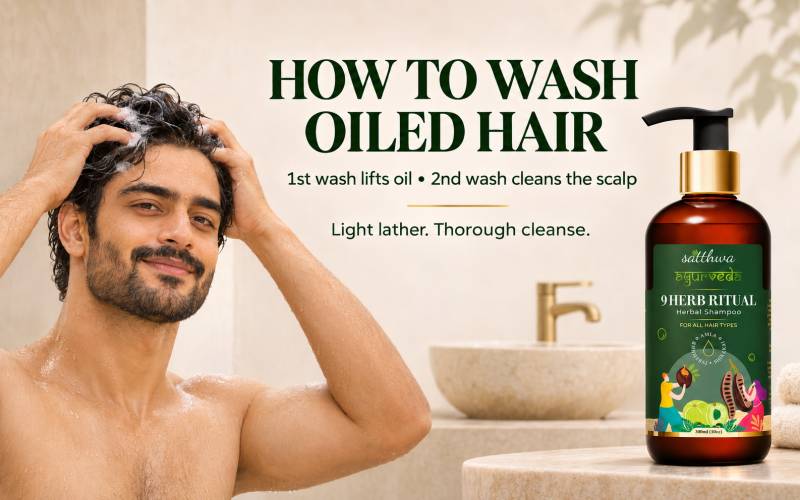
Quick answer: Wet your hair thoroughly, apply shampoo mainly to the scalp and massage with your fingertips for at least 30 seconds. Rinse completely. If the first wash mainly breaks down the oil, use a smaller amount for a second wash. A lighter lather can still clean effectively.
Hair oiling can leave the scalp feeling comfortable and the lengths easier to manage. The difficult part often comes afterwards. If the shampoo produces only a light foam, it is easy to assume that it has not removed the oil.
That assumption can lead to using far more shampoo than necessary. The better solution is to improve the washing method. An Amla Reetha Shikakai shampoo can clean oiled hair well when the hair is fully wet, the product reaches the scalp and enough time is given to massage and rinse it.
If you are still choosing between herbs that need preparation and a bottled formula, read this comparison of Amla Reetha Shikakai powder and shampoo. This guide focuses on what to do once you have chosen a liquid shampoo.
Why oiled hair can be harder to wash
Shampoo contains cleansing agents called surfactants. One part of a surfactant is attracted to oil, while another part is attracted to water. During washing, these ingredients help loosen oil and buildup so that water can carry them away.
When the scalp and hair carry a heavy layer of oil, much of the first application is used in breaking up that oil. This can reduce the visible foam. The shampoo is still doing useful work even if it does not create a large cloud of bubbles.
The amount and type of oil also affect the wash. A light application near the scalp is usually easier to remove than thick oil spread from the roots to the ends. Dense or long hair may also need to be divided into sections so the shampoo reaches the scalp instead of sitting on the surface.
Does less foam mean less cleansing?
No. Foam affects how shampoo feels and spreads, but it is not a direct measure of cleansing power. A scientific review of shampoo surfactant technology notes that consumers often connect abundant foam with product quality even though foam is not necessarily linked to how well a shampoo cleans.
Sulphate-based shampoos often create fast, dense lather. A sulphate-free shampoo uses a different cleansing system and may produce lighter or softer foam. The actual amount can also change with scalp oil, styling-product buildup, water hardness and the quantity of water used.
What this really means is simple: judge the wash by how the scalp and hair feel after rinsing and drying, not by the size of the bubbles.
Prepare your hair before shampooing
Use enough oil to cover the areas that need it, but avoid soaking the hair until it drips. More oil creates more work for the shampoo and may make a second wash necessary.
Before applying shampoo, rinse the scalp and hair thoroughly. Let the water reach the roots, especially if your hair is thick. A quick splash leaves dry areas where the shampoo cannot spread evenly. Spend about a minute wetting dense or heavily oiled hair.
Use lukewarm water rather than very hot water. Hot water is not required to remove the oil and can leave the scalp or hair feeling dry.
How to wash oiled hair with Amla Reetha Shikakai shampoo
Step 1: Apply the first wash to the scalp
Take a suitable amount of shampoo in your wet palm and spread it between both hands. Apply it to several points on the scalp instead of pouring all of it onto one area.
Focus first on the hairline, crown, sides and back of the scalp. These areas collect oil, sweat and buildup. The shampoo that runs down during rinsing is usually enough for the lengths unless they are also heavily oiled.
Step 2: Massage with your fingertips for at least 30 seconds
Use the pads of your fingertips and make small circular movements across the scalp. Do not scratch with your nails. Continue for at least 30 seconds so the cleanser has time to mix with the oil and reach different parts of the scalp.
If the product feels difficult to spread, add a little water with your hands and continue massaging before adding more shampoo. Water often improves distribution better than immediately using a larger quantity.
Step 3: Rinse completely
Rinse until the water runs through the roots without a slippery or heavy feeling. Lift sections of long or dense hair so water reaches the scalp. An incomplete rinse can leave hair feeling coated even when the shampoo has loosened the oil.
Step 4: Decide whether you need a second wash
Check the scalp after rinsing. If it still feels distinctly greasy, use a smaller amount of shampoo for a second wash. The second application often spreads and foams more easily because the first wash has already removed much of the surface oil.
Massage again for 30 to 60 seconds and rinse well. You do not need a second wash every time. Use it after heavier oiling or when one application leaves the roots greasy.
Step 5: Condition the lengths when needed
Apply conditioner mainly to the mid-lengths and ends rather than the scalp. This is useful for long, dry, curly, coloured or easily tangled hair. Rinse according to the product instructions.
The two-wash method at a glance
| Stage | Main purpose | What to expect |
|---|---|---|
| First wash | Breaks up oil and surface buildup | Foam may be light |
| Second wash | Cleans the scalp after much of the oil has lifted | Product usually spreads more easily |
| Final rinse | Removes cleanser and loosened residue | Scalp should feel clean, not coated |
| Conditioner | Helps the lengths feel smoother | Apply mainly below the roots |
Why your shampoo may not be lathering
Several factors can reduce foam even when the shampoo is working:
- Heavy oiling: The cleanser interacts with oil before it can create much foam.
- Insufficient water: Shampoo cannot spread well through hair that is only partly wet.
- Hard water: Minerals in the water can change how a shampoo lathers and rinses.
- Dense hair: The product may stay on the top layer instead of reaching the scalp.
- Styling-product buildup: Waxes, gels, dry shampoo and some leave-in products can make the first wash work harder.
- A sulphate-free formula: Some sulphate-free cleansing systems naturally create a softer lather.
Common mistakes that leave hair feeling oily
Using too much oil
A thicker layer does not always improve the oiling experience. It simply gives the shampoo more oil to remove. Start with a moderate amount and add more only where needed.
Applying shampoo mainly to the lengths
Oil and buildup usually collect most heavily at the scalp. Applying shampoo only over the visible hair can leave the roots greasy while drying the ends.
Adding more shampoo before adding water
If the shampoo is sitting in one place, extra product may not solve the problem. Add a little water and massage to help it move across the scalp.
Rushing the massage
Applying shampoo and rinsing it off immediately may leave some areas untouched. A focused 30-second massage is especially useful for men with short, dense hair because it is easy to assume that quick application is enough.
Expecting the first wash to create rich foam
On heavily oiled hair, the first wash may show little foam. Treat it as the oil-removal stage. Rinse before deciding whether the scalp needs a second application.
Scrubbing with fingernails
Hard scratching does not improve cleansing. It may irritate the scalp. Use the fingertips and gentle pressure.
Where Amla, Reetha and Shikakai fit into the routine
Reetha and Shikakai contain saponins, plant compounds associated with cleansing and light foam. Amla is traditionally used in Indian hair care alongside them. Their presence does not remove the need for a properly formulated cleansing base, correct application and thorough rinsing.
For a closer look at the ingredients and the limits of current evidence, read this guide to what Amla, Reetha, Shikakai, Bhringraj and other herbs do in shampoo.
One ready-to-use option is the Satthwa 9 Herb Ritual Amla Reetha Shikakai and Bhringraj Shampoo. The 300 ml formula combines eight Ayurvedic herbs with Tea Tree Oil and contains no added sulphates, SLS, SLES or parabens. As with any shampoo, the amount of lather can vary with oil buildup, water hardness and washing technique.
How to tell whether the scalp is clean
Do not look for a squeaky feeling. Hair can be clean without feeling stripped. After rinsing and drying, check whether:
- The roots feel fresh rather than coated.
- The hair separates normally instead of clumping with oil.
- There is no visible oily film near the hairline.
- The scalp feels comfortable without tightness, burning or itching.
If the roots still feel greasy, adjust one thing at a time. Use slightly less oil before the next wash, wet the hair more thoroughly, divide dense hair into sections or add a second shampoo application.
Frequently asked questions
Should I shampoo twice after every oiling session?
No. A light oil application may come out in one wash. Use a second wash when the first application leaves the scalp or roots greasy.
Why does the second application foam more?
The first application has already lifted part of the oil and buildup. With less oil present, the second application can spread and form foam more easily.
Can a low-lather shampoo clean properly?
Yes. Foam and cleansing are related parts of the washing experience, but more foam does not automatically mean better cleansing. Application, massage and rinsing matter more.
Should I apply shampoo directly to dry, oiled hair?
Follow the product instructions. Most liquid shampoos are made for wet hair. Thorough wetting helps the product spread and reduces the chance of using too much in one area.
What should I do if my hair still feels oily after two washes?
Use less oil next time and focus the shampoo on the scalp. Check whether styling products or hard water are contributing to buildup. If persistent oiliness comes with itching, redness, heavy flaking or scalp discomfort, speak with a dermatologist rather than repeatedly using more shampoo.
Can men use the same method?
Yes. The method depends on scalp oil and hair density, not gender. Men with short hair should still massage across the full scalp for at least 30 seconds instead of rinsing immediately.
The final takeaway
A lighter lather does not mean that an Amla Reetha Shikakai shampoo has failed. On oiled hair, the first wash may spend most of its cleansing action breaking up the oil. Thorough wetting, a focused fingertip massage and complete rinsing make a major difference.
Start with one wash. Add a smaller second wash only when the roots remain greasy. This approach cleans the scalp without turning every oiling session into a battle between more oil and more shampoo.