How Can I Test the Purity of Castor Oil? A Simple Guide
Castor oil, known for its numerous health and beauty benefits, is widely used for hair care, skin hydration, and even medicinal purposes. However, with so many brands available, ensuring that your castor oil is pure and free from additives is crucial for reaping its full benefits. Impure or diluted castor oil can contain chemicals or other oils that reduce it’s effectiveness. In this article, we’ll explore how to test the purity of castor oil with simple, at-home methods.
Table of Contents
Why is Castor Oil Purity Important?
Pure castor oil, often referred to as cold-pressed castor oil, is rich in ricinoleic acid, a fatty acid responsible for its anti-inflammatory and moisturizing properties. However, when castor oil is adulterated with cheaper oils or synthetic additives, it loses its potency and may even cause skin irritation or adverse effects.
Testing the purity of castor oil ensures that you’re using a product that will deliver the expected benefits, whether it’s for hair growth, skin care, or other uses.
Simple Methods to Test the Purity of Castor Oil
Here are some easy ways you can test the purity of castor oil at home:
1. Check the Color and Consistency
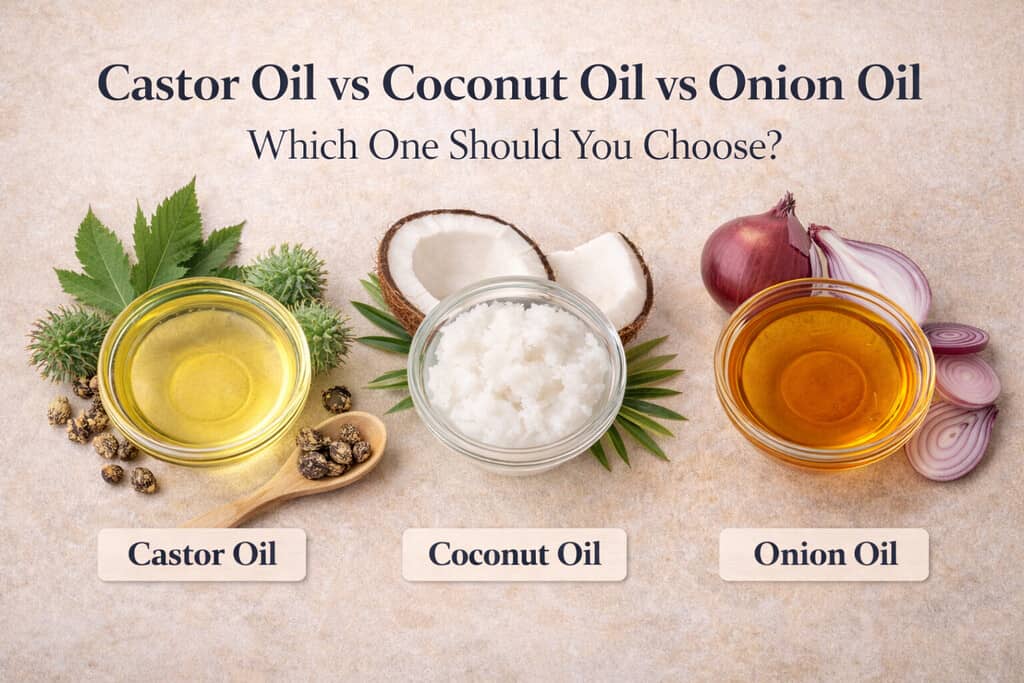
Pure castor oil typically has a pale yellow colour and a thick, viscous consistency. To test:
- Pour a small amount of castor oil onto a clean surface or in a bowl.
- Observe the colour. If the oil is too light, clear, or watery, it may be diluted with other oils or chemicals.
- Rub the oil between your fingers. Pure castor oil should feel thick and sticky, not runny or overly smooth. If it feels thin, it may not be pure.
2. Cold-Pressed Test
Cold-pressed castor oil is extracted without heat, preserving its nutrients and purity. To check if your castor oil is cold-pressed:
- Refrigerate a small amount of the oil for a few hours.
- After refrigerating, observe if the oil has solidified or thickened. Cold-pressed castor oil will thicken slightly but won’t freeze completely.
- If the oil stays liquid and thin even after refrigeration, it may not be cold-pressed, or it could be mixed with other oils that don’t solidify in low temperatures.
3. Solubility Test
Another way to test the purity of castor oil is by using a solubility test. This method checks whether the oil is adulterated with other oils that dilute its unique properties.
- Add a small amount of castor oil to a glass of water.
- Watch how the oil behaves. Pure castor oil is highly viscous and won’t easily mix with water. It will form a separate layer on top of the water.
- If the oil mixes quickly with the water or disperses, it may be diluted with other oils or chemicals.
4. Scent Test
Pure castor oil has a mild, earthy scent. Since it’s derived from natural castor beans, the aroma is not overpowering. Here’s how to check:
- Smell a small amount of castor oil.
- If the oil has a strong, unpleasant odour, or if it smells overly fragrant, it could be a sign that it’s been mixed with additives or artificial fragrances.
- Castor oil that has no scent at all might also indicate that it’s been processed or diluted, stripping it of its natural aroma.
5. Absorption Test
Pure castor oil has a slow absorption rate due to its thick consistency. This test helps you determine if the oil has been mixed with lighter oils.
- Apply a few drops of castor oil to your skin and gently massage it in.
- Observe how long it takes to absorb. Pure castor oil should take a few minutes to absorb due to its thick texture.
- If the oil absorbs too quickly or leaves a greasy residue, it may have been mixed with other oils like mineral oil or vegetable oils, which are lighter and absorb faster.
6. Ingredient Check
A reliable way to ensure that your castor oil is pure is by checking the ingredient label. Pure castor oil should list only one ingredient: 100% castor oil or Ricinus communis oil. Be wary of products that contain additional ingredients or mention “fragrance” or “preservatives.”
7. Price and Packaging
While not a definitive test, price and packaging can give you clues about the purity of castor oil. High-quality, cold-pressed castor oil is generally more expensive than refined or adulterated versions. Additionally, castor oil sold in dark glass bottles is better protected from light and oxidation, preserving its purity and effectiveness.
If the price seems unusually low for the quantity, it might be a sign that the oil has been diluted with cheaper ingredients.
Why Choose Cold-Pressed Castor Oil?
Cold-pressed castor oil retains more nutrients than oil that is heat-extracted. The process of cold pressing ensures that the oil is not exposed to heat, which can degrade its fatty acids and antioxidants. This method also preserves the oil’s rich ricinoleic acid content, making it more effective for hair growth, skin care, and therapeutic use.
If you want the full benefits of castor oil, always opt for cold-pressed, 100% pure varieties.
Conclusion: How to Test the Purity of Castor Oil
Testing the purity of castor oil is essential to ensure you’re using a product that delivers its full benefits. By following simple tests such as checking the colour, scent, consistency, and absorption rate, you can determine whether your castor oil is pure or diluted. Always choose cold-pressed castor oil for the best results and check the ingredient label for 100% pure castor oil with no additives.
Taking these steps will help you ensure that your castor oil is authentic, safe, and effective for your beauty and wellness routines.