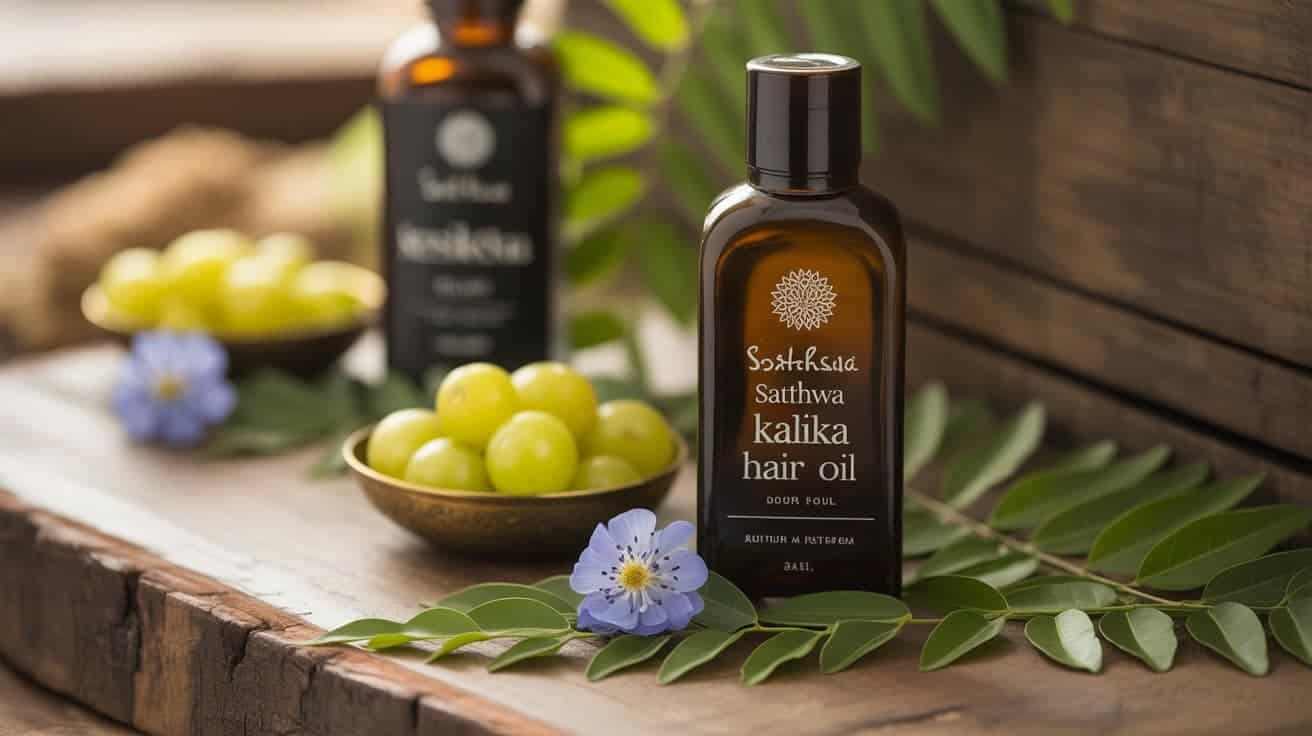
For generations, Indian households have used amla, reetha and shikakai to wash and care for their hair. Before bottled shampoos became common, these herbs were often soaked, boiled or ground into powders to create a natural hair wash.
Today, the same ingredients are appearing in ready-to-use Ayurvedic shampoos. Some formulas also include bhringraj, brahmi, henna and other traditional botanicals.
But this raises an interesting question. Is the traditional amla-reetha-shikakai powder mixture better for your hair, or can a modern herbal shampoo offer the same practical benefits with less effort?
The answer depends on your hair type, scalp condition and how much time you want to spend on your hair care routine.
Why Amla, Reetha and Shikakai Remain Popular
These three ingredients have different roles in traditional Indian hair care.
Reetha (Soapnut) contains natural saponins, which help lift oil and dirt when mixed with water. It has been used as a plant-based cleansing agent for generations.
Shikakai also contains saponins and is traditionally used for washing hair. Its cleansing properties make it a natural partner for reetha.
Amla (Indian Gooseberry) is valued in Ayurvedic preparations for hair conditioning and maintaining a healthy-looking appearance.
Together, these ingredients offer a familiar approach to hair cleansing.
However, there is an important distinction between traditional use and proven clinical benefits. While reetha and shikakai have recognised cleansing properties, strong human clinical evidence that these ingredients prevent hair loss or regrow hair in shampoo form remains limited.
Traditional Herbal Hair Wash: How Does It Work?
A traditional herbal hair wash usually involves mixing dried amla, reetha and shikakai powders with water.
Some people soak the herbs overnight. Others boil whole herbs, strain the liquid and use it to wash their hair.
The main appeal is control. You decide which herbs to use, how much to add and whether to include other ingredients.
There are some practical challenges, though.
1. Preparation takes time
Making a herbal wash requires measuring, soaking, heating or straining ingredients. This may work well as a weekend ritual, but it can become inconvenient during a busy week.
2. Results can vary between batches
The cleansing strength depends on the herbs, their quality, the preparation method and the amount of water used.
One batch may remove oil effectively, while another may leave the hair feeling coated.
3. Rinsing can be difficult
Finely ground herbal powders may cling to thick, curly or long hair. Poor rinsing can leave particles behind.
4. Storage requires care
Freshly prepared herbal mixtures contain water and generally lack a tested preservation system. They are best prepared in small quantities and used promptly rather than stored for extended periods.
Despite these challenges, traditional powders remain a reasonable choice for people who enjoy preparing their own hair care products.
What Makes a Ready-Made Amla Reetha Shikakai Shampoo Different?
Modern herbal shampoos combine botanical ingredients with a formulated cleansing base.
Instead of preparing herbs separately, you can apply a measured amount directly to wet hair.
This makes regular hair washing easier, particularly for people who oil their hair frequently or wash it several times a week.
A properly formulated shampoo can also provide more consistent lather, texture and rinsing than a homemade herbal mixture.
However, the quality of the finished formulation matters more than the number of herbs listed on the bottle.
A shampoo containing ten botanical extracts is not automatically better than one containing three. The type and concentration of cleansing agents, conditioning ingredients and preservatives all influence how the shampoo performs.
Amla Reetha Shikakai Powder vs Herbal Shampoo: A Quick Comparison
| Feature | Traditional Herbal Powder | Ready-Made Herbal Shampoo |
|---|---|---|
| Preparation | Mixing or soaking required | Ready to use |
| Cleansing | Depends on herbs and preparation | Depends on the complete formula |
| Consistency | Can vary between batches | More consistent |
| Rinsing | May leave herbal particles | Usually easier to rinse |
| Storage | Fresh mixtures need prompt use | Formulated for shelf storage |
| Ingredient control | Greater control over the mixture | Depends on the manufacturer’s formula |
| Convenience | Requires extra effort | Suits busy routines |
Neither option is automatically healthier or safer. The choice depends on the formulation, your hair and how your scalp responds.
Why Bhringraj and Other Herbs Are Being Added to Shampoos
Traditional amla-reetha-shikakai combinations are increasingly being expanded with other Ayurvedic ingredients.
Bhringraj is one example.
It has a long history in Ayurvedic hair care and is frequently associated with healthy-looking hair. However, research suggesting hair growth benefits comes mainly from laboratory and animal studies. These results cannot establish that a rinse-off bhringraj shampoo promotes hair growth in humans.
Other commonly used botanicals include:
- Brahmi: Traditionally used in scalp and hair preparations.
- Henna: Commonly associated with hair conditioning and colouring, although its effects depend on formulation and contact time.
- Liquorice: Included in some botanical scalp-care products.
- Haritaki: A traditional ingredient in Ayurvedic preparations.
- Tea tree oil: Used in scalp-care products, although it can irritate sensitive skin.
These ingredients may contribute to the overall character of a shampoo, but their presence alone does not establish that the product treats dandruff, stops greying or reverses hair loss.
For readers interested in the research behind these ingredients, Satthwa has published a detailed guide explaining what amla, reetha, shikakai, bhringraj and the other botanicals actually do.
An Example: Satthwa 9 Herb Ritual Ayurvedic Shampoo
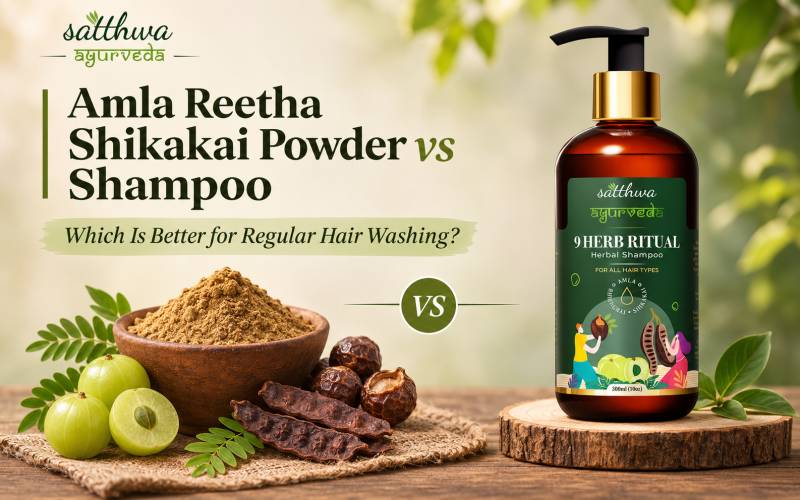
One example of this ready-to-use approach is the Satthwa 9 Herb Ritual Ayurvedic Shampoo, which brings eight traditional Ayurvedic herbs together with tea tree oil.
The 300 ml shampoo contains amla, reetha, shikakai, bhringraj, brahmi, henna, liquorice, haritaki and tea tree oil.
Its formula is free from added sulphates, including SLS and SLES, as well as parabens.
The product is intended for regular cleansing and for helping hair feel soft, smooth and manageable. It is marketed for both men and women across different hair types.
What makes this type of shampoo practical is that it removes the preparation involved in a traditional herbal wash. You do not need to soak powders, boil herbs or strain a mixture before washing your hair.
It is important to distinguish convenience from clinical effectiveness. The product is a cosmetic cleanser, not a medical treatment for hair loss or scalp disease.
Readers looking for a ready-made alternative can explore the Satthwa 9 Herb Ritual Ayurvedic Shampoo, including its ingredient information and usage instructions.
Is a Sulphate-Free Herbal Shampoo Always Better?
Not necessarily.
Sulphates such as sodium lauryl sulphate (SLS) and sodium laureth sulphate (SLES) are cleansing ingredients commonly used in shampoos.
Some people find certain sulphate-based formulas too cleansing for their hair, particularly when their scalp is dry or their hair has been chemically treated.
Sulphate-free shampoos use alternative cleansing agents, which may produce a different lather and washing experience.
But sulphate-free does not automatically mean irritation-free.
Fragrances, essential oils, preservatives and plant extracts can also cause reactions in sensitive individuals.
The best shampoo is one that cleans your scalp effectively without leaving your hair excessively dry or causing discomfort.
How Often Should You Wash Your Hair With an Ayurvedic Shampoo?
Your scalp condition matters more than whether the shampoo is herbal or conventional.
The American Academy of Dermatology recommends washing hair according to how quickly it becomes dirty or oily.
A practical routine might look like this:
For oily scalps: Wash as often as needed to remove excess oil and buildup. Some people may need daily washing.
For normal scalps: Two or three washes per week may be a useful starting point.
For dry, thick or curly hair: Wash according to your scalp’s needs, while avoiding unnecessary dryness.
For people who oil their hair: A second shampoo application may help remove heavier oil residue.
Apply shampoo mainly to the scalp, where oil and buildup accumulate. Rinse thoroughly and use a conditioner when needed, especially on dry lengths and ends.
You can read more in the American Academy of Dermatology’s healthy hair care guide.
Who Should Choose Traditional Powder and Who Should Choose Shampoo?
Traditional herbal powder may suit someone who:
- Enjoys preparing homemade hair care mixtures.
- Wants direct control over the herbs being used.
- Does not mind the additional preparation and rinsing.
- Prefers a simple occasional hair-cleansing ritual.
A ready-made Ayurvedic shampoo may suit someone who:
- Wants herbal ingredients without preparing them at home.
- Washes hair regularly.
- Needs a convenient cleanser after applying hair oil.
- Prefers predictable application and easier rinsing.
- Wants a routine that works for both men and women in the household.
The important point is that a shampoo should be judged by how well it cleans and how your hair and scalp feel after repeated use.
Frequently Asked Questions
Can amla reetha shikakai shampoo be used regularly?
Yes, provided the formula suits your scalp. Adjust washing frequency according to oiliness, dryness and product buildup. Stop using a product if it causes irritation.
Does amla reetha shikakai shampoo help hair growth?
These herbs have a long history in traditional hair care, but there is insufficient clinical evidence that a rinse-off shampoo containing them causes new hair growth. Shampoo primarily cleanses the scalp and hair.
Can men use amla reetha shikakai shampoo?
Yes. Shampoo selection should depend on scalp condition, hair type and cleansing needs rather than gender.
Is an Ayurvedic shampoo better than a homemade herbal wash?
Neither is automatically better. Homemade mixtures offer ingredient control, while formulated shampoos usually offer greater convenience and consistency.
Can I use herbal shampoo after applying hair oil?
Yes. Apply shampoo to wet hair and massage gently into the scalp. If a large amount of oil has been used, a second wash may be necessary.
Final Verdict: Traditional Ingredients, Modern Convenience
Amla, reetha and shikakai have remained popular because they offer a traditional approach to hair cleansing.
Homemade herbal powders give you control over the ingredients. Modern Ayurvedic shampoos make these familiar ingredients easier to incorporate into a regular routine.
For someone who enjoys preparing herbal mixtures, traditional powders may remain the preferred option.
For someone who wants a quick, convenient wash without abandoning familiar botanical ingredients, a well-formulated amla-reetha-shikakai shampoo is worth considering.
Ultimately, good hair care is about consistency, suitable cleansing and choosing products that work for your individual scalp.